
Gorilla trekking is one of the most popular wildlife safari activities in Uganda. The country…
Nyero Rock Paintings Uganda
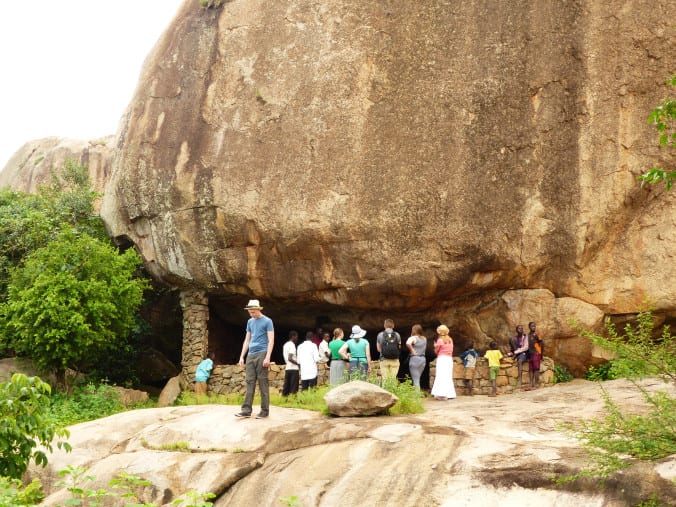
Nyero Rock Paintings are among the most important rock art sites in Uganda and one of the best cultural places to visit in eastern Uganda. Located near Kumi and Ngora, the site is known for ancient paintings made on rock shelters, with red and white geometric designs that include concentric circles, lines, oval shapes, and forms often linked to early hunter-gatherer communities. The paintings are believed to date before 1250 CE and were first documented in 1913. They are part of a wider rock art tradition found across eastern, central and southern Africa. Today, Nyero Rock Paintings are valued as a cultural heritage site and an important part of Uganda’s historical identity. A visit to Nyero gives travellers a chance to explore ancient shelters, learn about early communities, understand the cultural importance of the site, and add a historical stop to an eastern Uganda safari route. The site works well for travellers visiting Kumi, Soroti, Sipi Falls, Mount Elgon, Pian Upe, or Kidepo Valley National Park.
How to Get to Nyero Rock Paintings From Kampala and Kumi
Nyero Rock Paintings are located near Kumi and Ngora in eastern Uganda. The site can be reached by road from Kampala through Jinja, Mbale and Kumi, with the journey usually taking about 5 to 6 hours depending on traffic, weather and stopovers. From Kumi, visitors can continue to the Nyero area for a guided visit around the rock shelters. An entrance fee is charged at the site, and a local guide is available to explain the history, cultural meaning and different shelters. A guided visit is recommended because the rock paintings are not just visual attractions. They are connected to oral history, ancestral beliefs, early settlement patterns and cultural identity in eastern Uganda.
Nyero Rock Painting Shelters and What to See
The Nyero rock art site has six main shelters, numbered from Nyero 1 to Nyero 6. Each shelter has different rock formations, painted symbols and levels of visibility. The most visited shelters are Nyero 1, Nyero 2 and Nyero 3, while the remaining shelters add more depth for travellers who want to explore the wider site. A guided walk through the shelters helps visitors understand the designs, possible meanings, local beliefs and preservation challenges linked to this ancient cultural site.
Nyero 1, White Concentric Circles and Acacia Pod Shapes
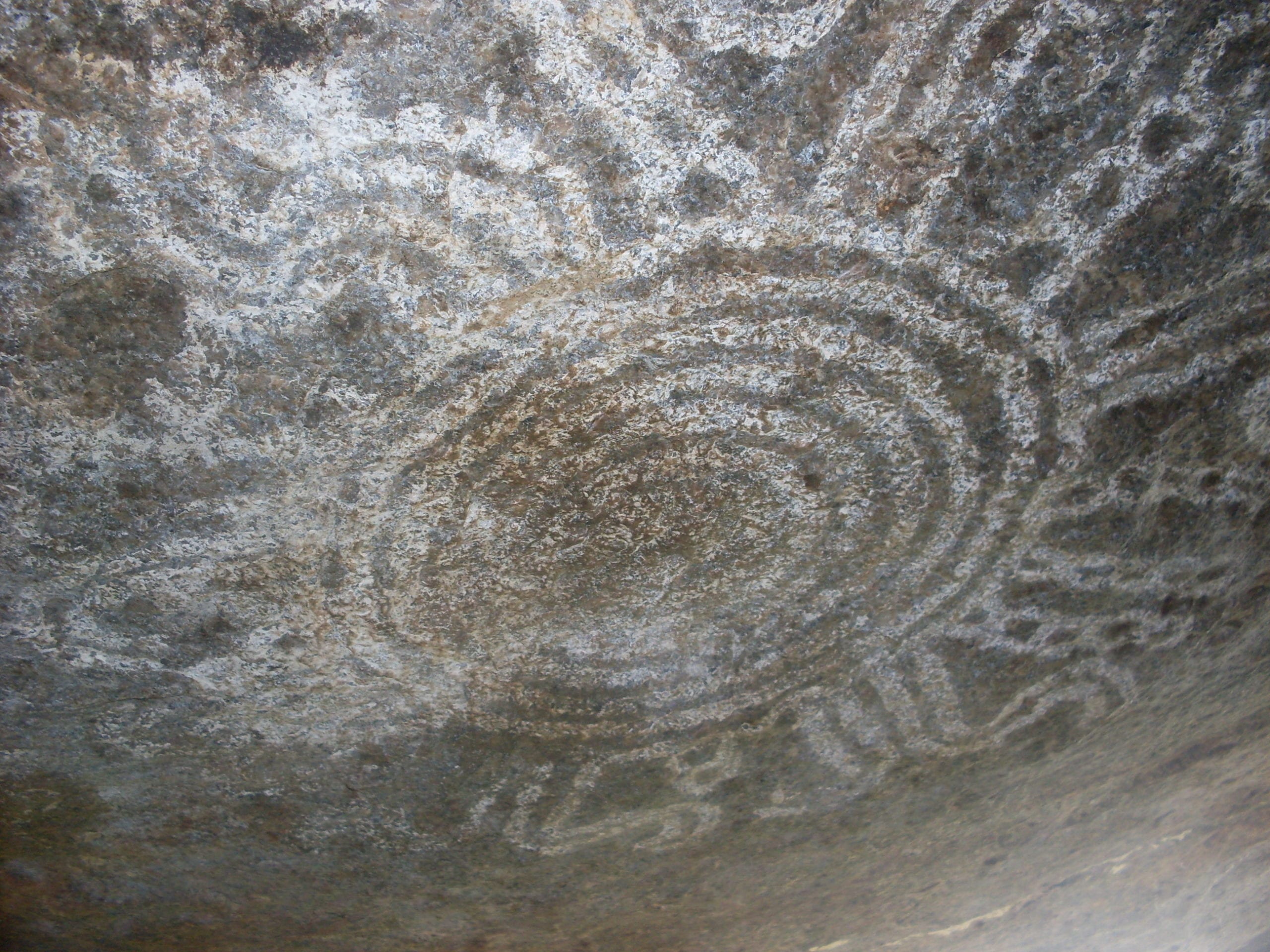
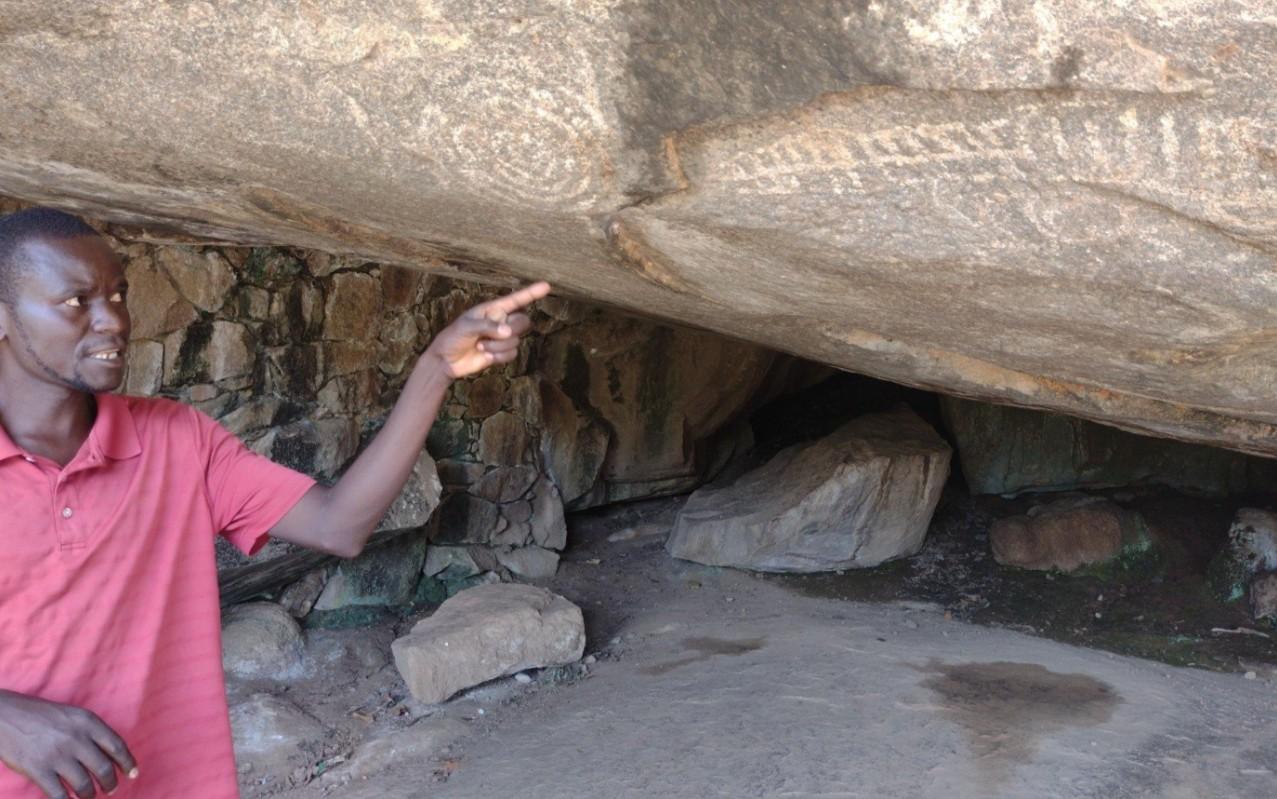
Nyero 1 is formed by a low overhanging rock supported by three smaller rocks. The shelter contains white concentric circle designs and paintings that resemble acacia pods. This is a useful starting point for visitors because it introduces the geometric style that appears across the Nyero rock art site. A guide can explain how these shapes are interpreted and why they remain important in understanding early rock art traditions in Uganda.
Nyero 2, Main Rock Shelter and Red Geometric Paintings
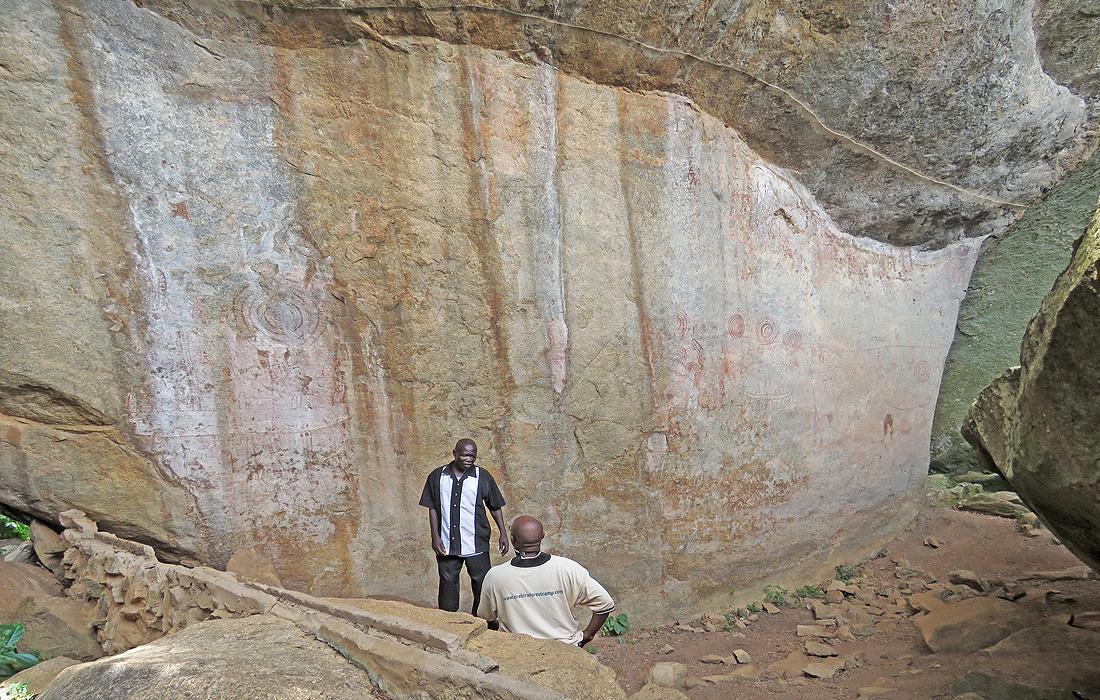
Nyero 2 is the main shelter at the site and one of the most important areas to visit. It has a high vertical rock wall and an overhang that helps protect the paintings from direct rain. The shelter is dominated by red geometric paintings, including concentric circles and a large shape that is sometimes interpreted as an acacia pod or canoe. These designs are among the most recognised features of Nyero Rock Paintings. On the southeastern side of the shelter, there is a passage through the boulders leading to a small dark section with a cavity often referred to as “the pocket.” Local traditions connect this area with offerings and ancestral respect. Some visitors still place small offerings there, showing that the site continues to hold cultural meaning.
Nyero 3, Rock Shelter With White Concentric Circles
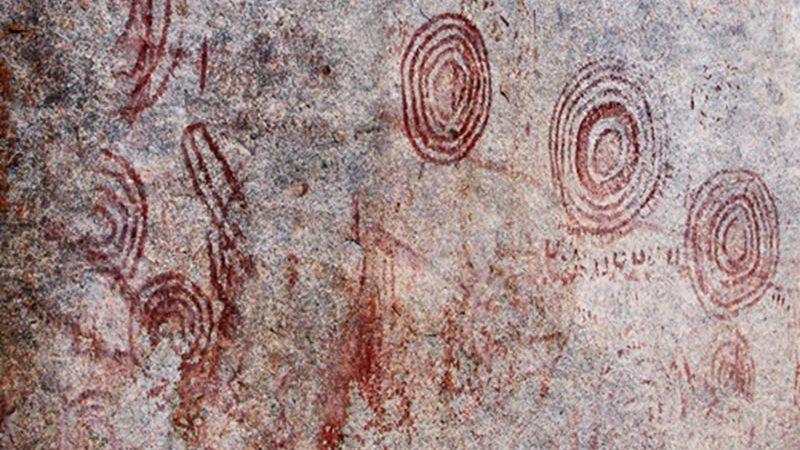
Nyero 3 is located about 8 kilometres north of Nyero 2. The shelter is formed by a large boulder resting on supporting rocks, with limited standing space inside. Visitors may need to crouch carefully to access a safer viewing section. The paintings include white concentric circles surrounded by curved designs and divided line patterns. Because access can be narrow and uneven, visitors should follow the guide’s instructions while moving around the shelter.
Nyero 4, Finger Painted Circles and Line Designs
Nyero 4 is a smaller shelter found on the southwestern side of the hill. It contains finger-painted concentric circles, line patterns and two conical shapes. Although it is smaller than Nyero 2, this shelter adds variety to the wider site because it shows another expression of the geometric rock art style found at Nyero.
Nyero 5, Red Circular and Linear Rock Art Designs
Nyero 5 is located close to a primary school on the western side of the hill. Although part of the shelter has been damaged, some visible paintings remain. The visible sections include red geometric motifs made up of circular and linear shapes. These designs appear to have been created using both brush and finger-painting techniques. This shelter also helps visitors understand the importance of protecting rock art from damage, weathering and human impact.
Nyero 6, Hilltop Views and Red Pigment Traces
Nyero 6 is located on top of the hill and offers beautiful views of the surrounding countryside. The shelter has traces of red pigment, including finger-painted outlines of a small oval shape and a slanting L-shaped design. This final shelter gives visitors both cultural and scenic value, making it a good place to appreciate the wider landscape around Nyero.
Why Visit Nyero Rock Paintings During a Uganda Cultural Safari?
Nyero Rock Paintings are worth visiting for travellers interested in Uganda’s cultural heritage, archaeology, ancient art and eastern Uganda history. The site offers a different experience from wildlife parks because it connects visitors to early human expression, spiritual beliefs and local cultural identity. Nyero can be added to an eastern Uganda itinerary that includes Sipi Falls, Mount Elgon, Pian Upe Wildlife Reserve, Soroti, Kumi and Kidepo Valley National Park. It is especially suitable for travellers who want to combine nature, culture, history and scenic road travel.
Best Time to Visit Nyero Rock Paintings
Nyero Rock Paintings can be visited throughout the year. The drier months are more comfortable for walking around the shelters because the ground is less slippery and visibility is better. During rainy periods, visitors should move carefully around the rocks and follow the guide’s advice. Morning and late afternoon visits are usually more comfortable because temperatures are cooler and lighting is better for photography.
Plan Your Nyero Rock Paintings Tour With AA Safaris and Tours
With these shelters, Nyero Rock Paintings offer a meaningful cultural stop for travellers interested in Uganda’s ancient heritage. Since the site is located in eastern Uganda, it can be combined with Sipi Falls, Mount Elgon, Pian Upe Wildlife Reserve, Soroti, Kumi and longer safari routes towards Kidepo Valley National Park. AA Safaris and Tours can help you plan a cultural visit to Nyero Rock Paintings as part of an eastern Uganda safari, Kidepo safari or wider Uganda cultural tour.
Related Posts