
Kigezi Wildlife Reserve is located in southwestern Uganda in Rukungiri District and was established in 1952. The reserve covers about 265 sq km and forms the southern extension of Queen Elizabeth National Park. It plays an important role as a buffer zone between the national park and the surrounding communities in the south and east. The reserve lies along the western arm of the Albertine Rift Valley, which shapes its landscape and vegetation.
Landscape and vegetation in Kigezi Wildlife Reserve
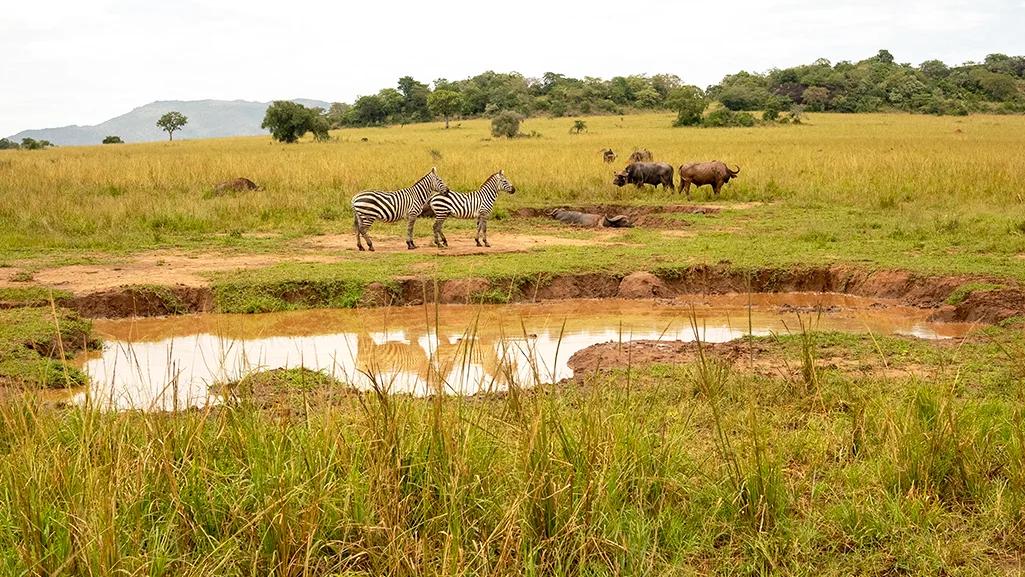
Kigezi Wildlife Reserve is characterized by a mix of savannah grassland, woodland, moist forest patches, and scattered thickets. These vegetation types are similar to parts of Queen Elizabeth National Park, especially the southern sectors near Ishasha. Open grassland areas make it easier to spot wildlife, while forested sections support birdlife and primates. The combination of habitats gives the reserve a balanced ecosystem suitable for wildlife viewing and nature-based experiences.
Wildlife in Kigezi Wildlife Reserve
Savannah wildlife and large mammals
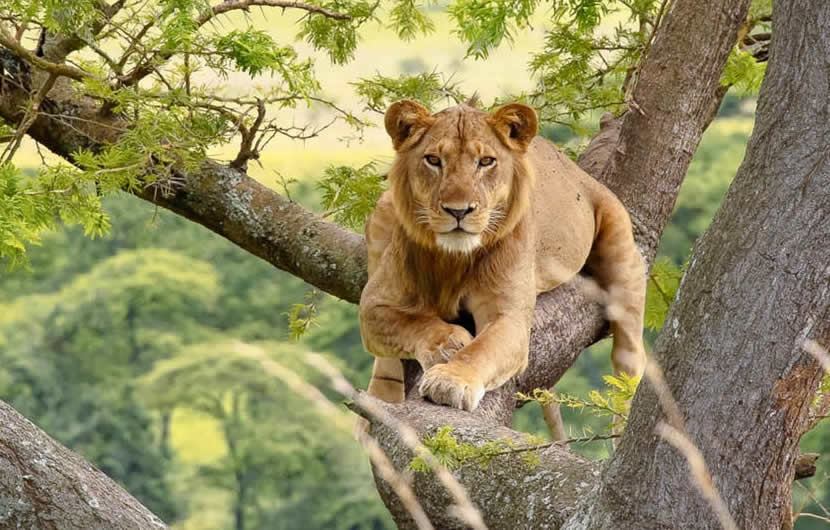
Kigezi Wildlife Reserve supports wildlife that is linked to the wider Queen Elizabeth ecosystem. Visitors may encounter animals such as bushbucks, waterbucks, topis, elephants, duikers, buffaloes, and giant forest hogs. Around water sources, hippos may also be seen. Wildlife movement can occur between the reserve and nearby areas such as the Ishasha sector. Predators such as lions and leopards may occur in the wider ecosystem, although sightings are not guaranteed.
Birdwatching in Kigezi Wildlife Reserve
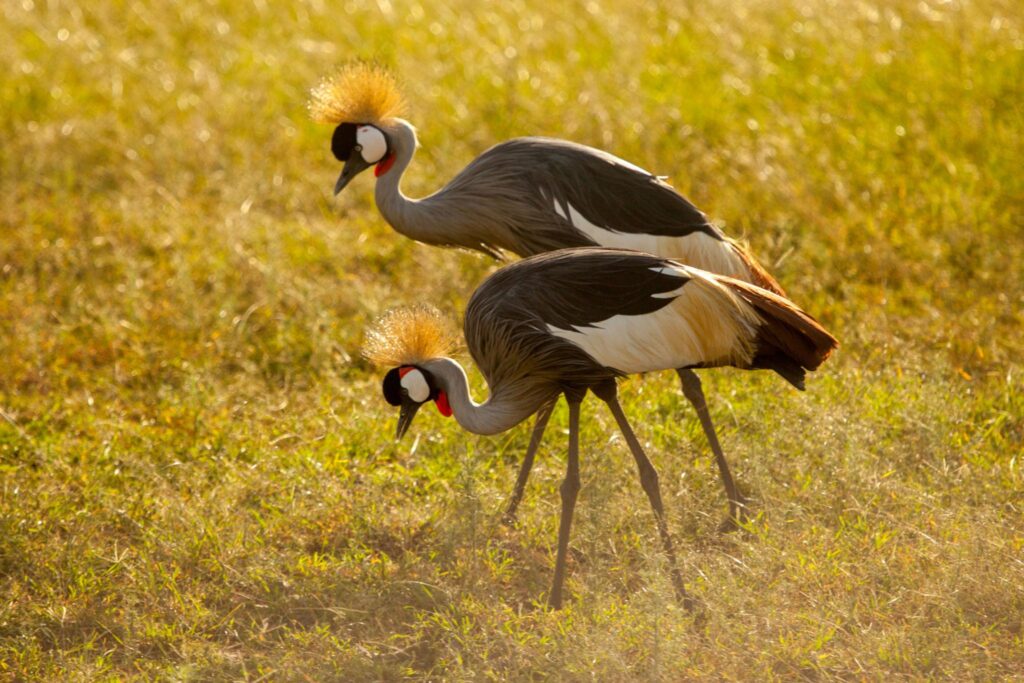
Kigezi Wildlife Reserve is a good destination for birdwatching due to its mix of savannah, woodland, and forest habitats. Bird species that may be seen include grey crowned cranes, hammerkops, saddle-billed storks, marabou storks, and Verreaux’s eagle owls. A guided birdwatching experience can improve sightings, especially for visitors interested in identifying a wider range of species.
Primates and forest species
The reserve also supports primates, particularly in forested areas. Visitors may see species such as black and white colobus monkeys, vervet monkeys, and red colobus monkeys. Guided nature walks through forested sections are one of the best ways to observe these primates in their natural habitat.
Where to stay near Kigezi Wildlife Reserve
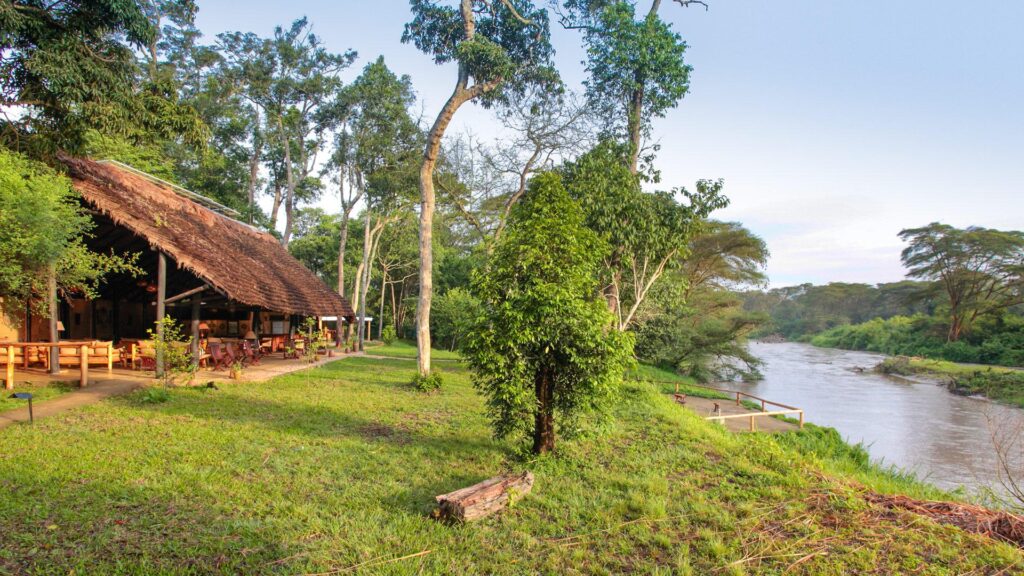
There are no accommodation facilities in the Kigezi Wildlife Reserve itself. Visitors usually stay in nearby areas such as Rukungiri, Kasese, or within the Ishasha sector of Queen Elizabeth National Park. Planning accommodation is important because the reserve is not a major tourist hub with extensive lodging options.
Best time to visit Kigezi Wildlife Reserve
Kigezi Wildlife Reserve can be visited throughout the year. However, the dry seasons from June to September and December to February are generally better for travel and wildlife viewing because roads are more accessible and vegetation is less dense. The wet months, especially March to May and October to November, bring greener landscapes and may support wildlife movement, particularly for species such as elephants. These months can also be rewarding for birdwatching.