
Bugungu Wildlife Reserve is a quiet wildlife destination located in western Uganda, shared by Buliisa and Masindi districts. The reserve covers about 52,000 hectares and was established in 1968 as part of the wider Murchison Falls Conservation Area. Although Bugungu is one of Uganda’s less-visited wildlife reserves, it offers beautiful savannah grasslands, seasonal wetlands, Rift Valley escarpment scenery, and a peaceful safari experience away from the busier sections of Murchison Falls National Park. The reserve is best visited as an extension to a Murchison Falls safari, especially for travellers interested in bird watching, wildlife viewing, nature walks, community visits, and quiet landscapes close to Lake Albert.
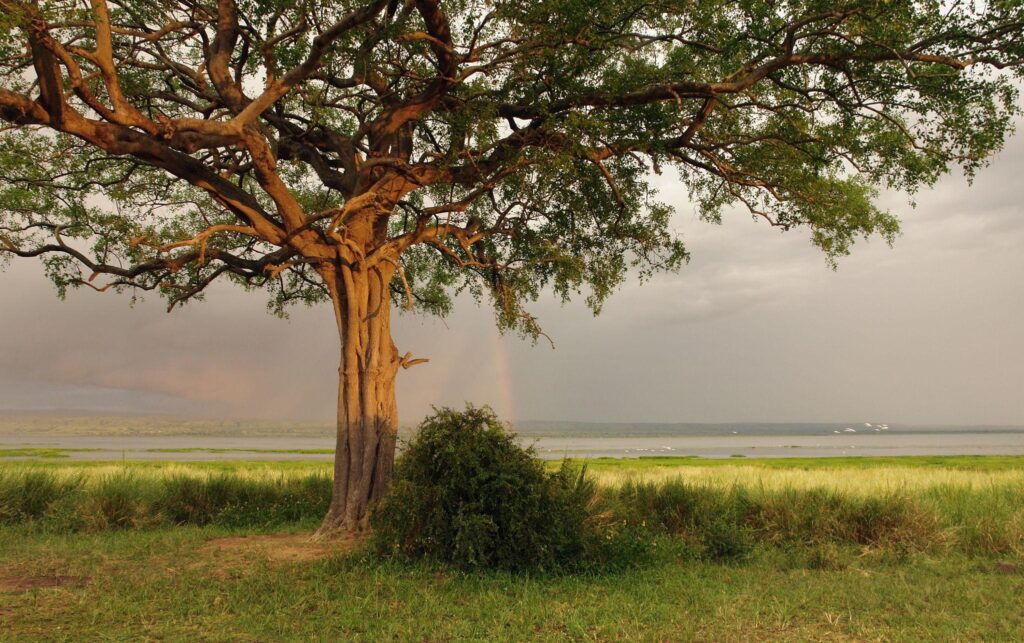
Landscape and Vegetation in Bugungu Wildlife Reserve
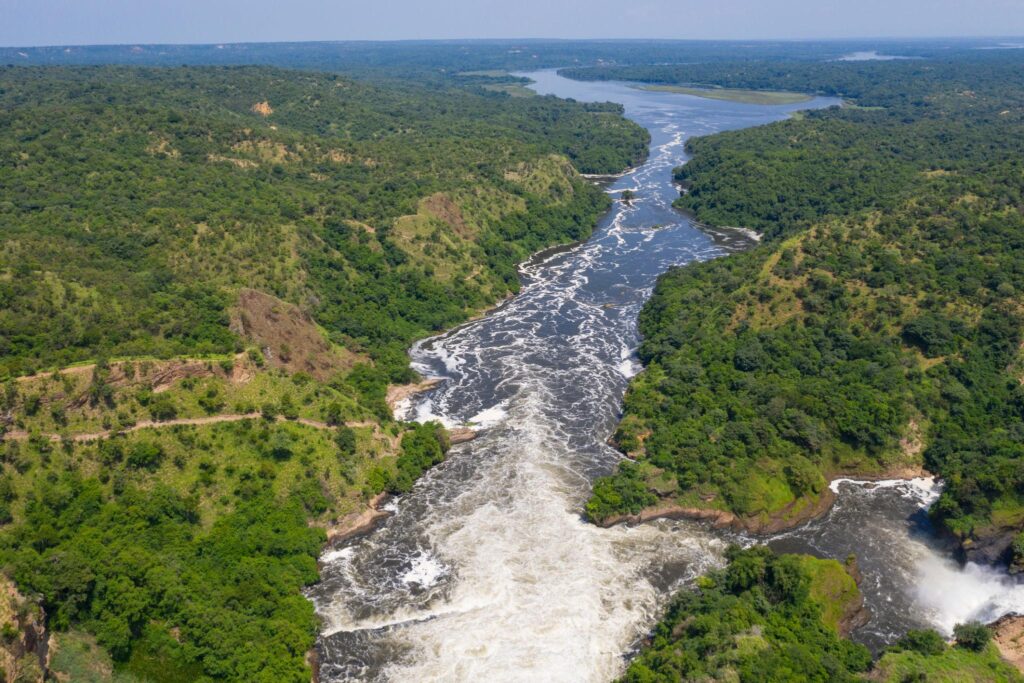
Bugungu Wildlife Reserve is largely covered by savannah grassland, scattered woodland, and seasonal wetlands along the Rift Valley escarpment. These habitats create suitable feeding and breeding areas for different wildlife species. The wetlands are especially important for birds and some shy animals such as sitatungas, while the open grasslands support grazers like Uganda kob, waterbuck, reedbuck, and eland. Because the reserve lies near Murchison Falls National Park, some wildlife may move between the two areas depending on season, water availability, and grazing conditions. This mix of open plains, wetlands, and escarpment views makes Bugungu a good destination for travellers who enjoy quiet scenery and less crowded safari routes.
Things to Do in Bugungu Wildlife Reserve
Wildlife Viewing in Bugungu Wildlife Reserve
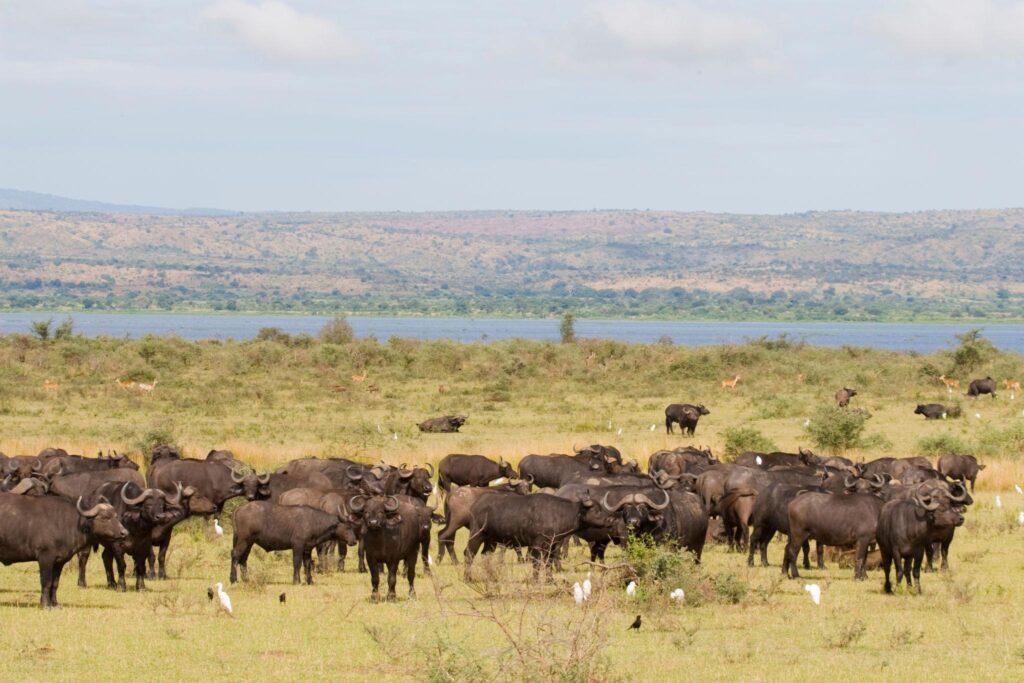
Wildlife viewing is one of the main activities in Bugungu Wildlife Reserve. The reserve supports several species that are also found in the greater Murchison Falls landscape, making it a good addition for travellers already exploring the national park. Animals to look out for include Uganda kob, bushbuck, waterbuck, reedbuck, eland, warthogs, and buffaloes. Lions and leopards may also be present in the wider conservation area, although sightings are not guaranteed. At certain times, elephants and giraffes may move from Murchison Falls National Park into Bugungu in search of fresh grazing areas. The reserve is also known as one of the places where sitatungas may be seen in swampy areas, although they are shy and require patience. Wildlife viewing is best done in the early morning or late afternoon when animals are more active and temperatures are cooler.
Primates and Forest Wildlife near Bugungu
Bugungu is not mainly a primate destination, but some primates can be found in forested sections of the reserve and nearby forest habitats. Visitors may see olive baboons, vervet monkeys, and other smaller forest species. For travellers who want a stronger primate experience, Bugungu can be combined with Budongo Forest, which is better known for chimpanzee tracking and forest birding. This makes the Murchison Falls Conservation Area a good option for travellers who want both savannah wildlife and forest experiences in one safari route.
Bird Watching in Bugungu Wildlife Reserve
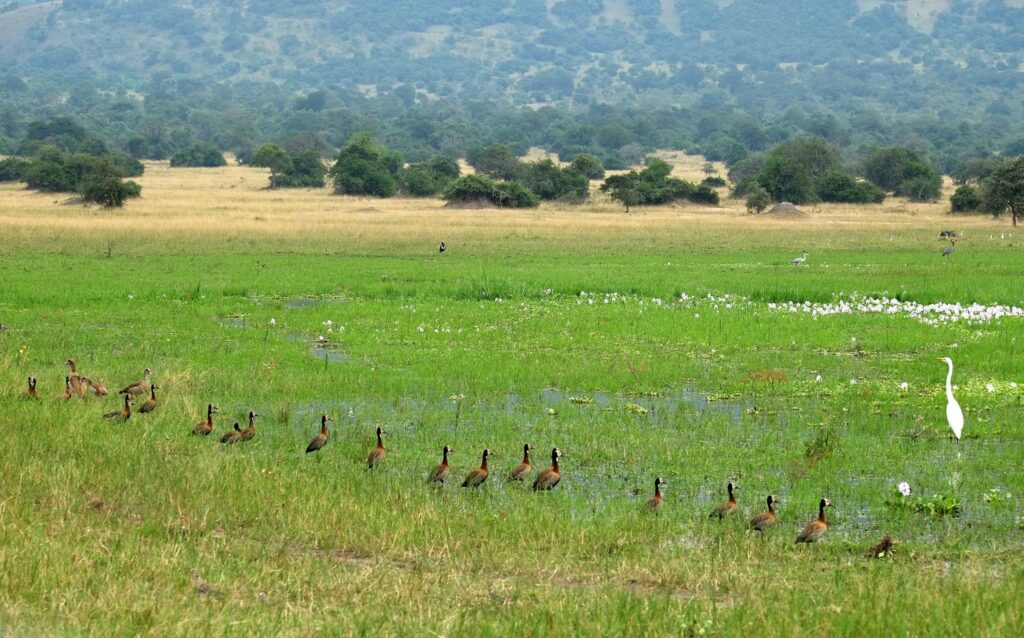
Bugungu Wildlife Reserve is a rewarding birding destination with over 200 recorded bird species. Its mix of grassland, wetlands, woodland, and nearby Lake Albert habitats makes it suitable for both casual bird watchers and serious birders. A specialist birding guide is recommended because many species are best identified by call, movement, and habitat. Birding is usually most productive in the early morning when activity is high. Bird species to look out for include swamp flycatcher, double-toothed barbet, speckle-breasted woodpecker, saddle-billed stork, black-headed gonolek, Abyssinian bustard, and black-bellied bustard. The shoebill stork may also be spotted in swampy areas, although sightings should be treated as possible rather than guaranteed. Travellers should carry binoculars, a camera, comfortable walking shoes, light clothing, and drinking water.
Community Visits near Bugungu Wildlife Reserve
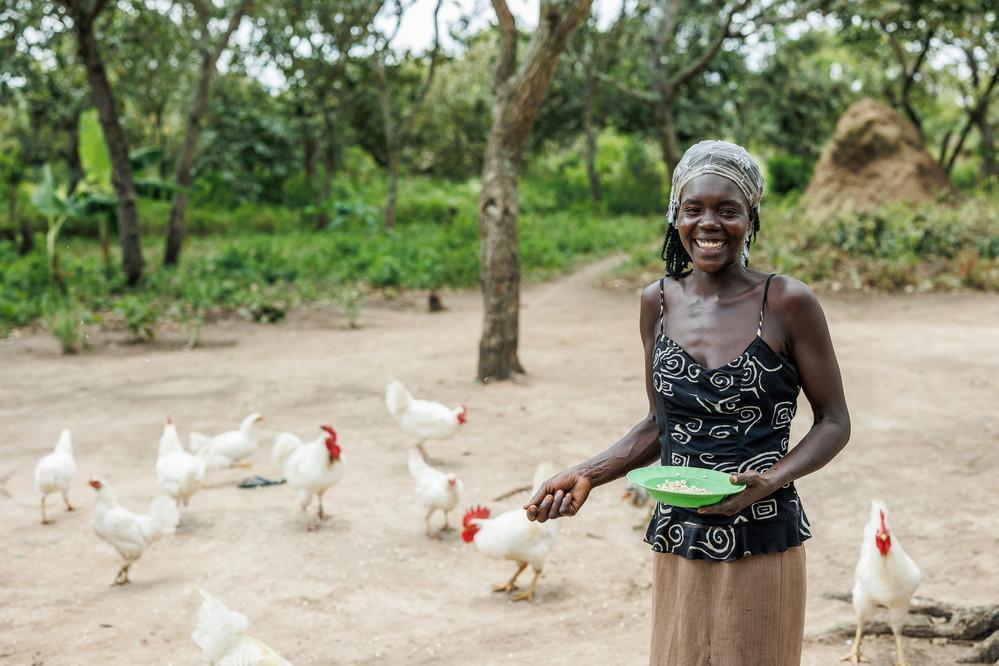
Community visits around Bugungu Wildlife Reserve give travellers a chance to learn about the people living near the conservation area. These experiences may include guided walks to nearby villages, local storytelling, farming activities, cultural interaction, and learning how communities live alongside wildlife. Community visits also help travellers understand the role local people play in conservation. When organised responsibly, these visits provide direct benefits to surrounding communities and create more support for protecting the reserve. This activity works well for visitors who want a deeper safari experience beyond wildlife viewing.
Best Time to Visit Bugungu Wildlife Reserve
Bugungu Wildlife Reserve can be visited throughout the year, but the dry months are usually the best for easier movement and better wildlife viewing. The main dry seasons run from June to September and from December to February. During these months, roads are generally more passable, vegetation is shorter, and animals are easier to spot around open areas and water sources. The wetter months can make some roads slippery or difficult to use, especially in remote sections of the reserve. However, the reserve remains open all year, and the rainy season can still be rewarding for bird watching and greener scenery.
Where to Stay near Bugungu Wildlife Reserve
There are currently limited accommodation options inside Bugungu Wildlife Reserve itself. Most visitors stay in lodges around Murchison Falls National Park, Buliisa, Masindi, or along the Lake Albert route, depending on the safari plan. For travellers combining Bugungu with Murchison Falls, staying near the national park is the most convenient option. This allows easy access to game drives, Nile boat cruises, the top of the falls, and Bugungu Wildlife Reserve. Camping may also be possible for adventurous travellers, but this should be arranged in advance with the right guidance and equipment.