
Kyambura Wildlife Reserve is located in western Uganda on the northeastern side of Queen Elizabeth National Park. It acts as a buffer zone for the park. It forms part of the wider Queen Elizabeth Protected Area together with Maramagambo Forest, Queen Elizabeth National Park, and Kigezi Wildlife Reserve. The reserve was first established as a controlled hunting area in 1962 and was later upgraded to reserve status in 1965. Today, Kyambura is best known for Kyambura Gorge, a dramatic forested valley that attracts travelers interested in chimpanzee tracking, primates, birdwatching, and guided nature walks.
Landscape and habitats in Kyambura Wildlife Reserve
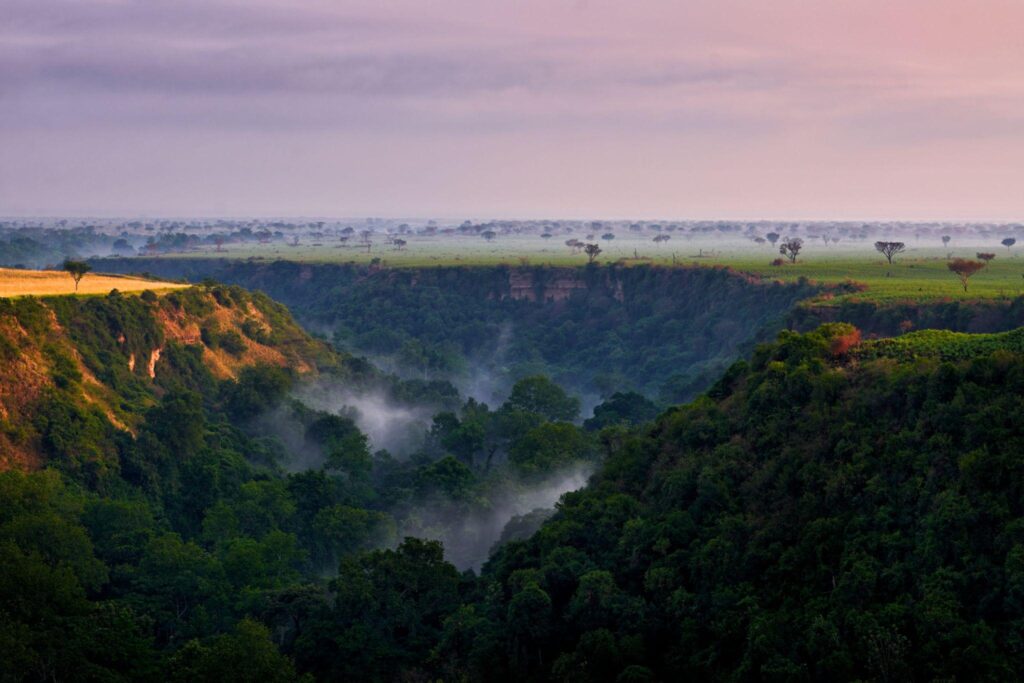
Kyambura Wildlife Reserve is mainly covered by savannah vegetation, with rolling landscapes, forested sections, and the famous Kyambura Gorge. The gorge has a running river and thick forest, which create a suitable habitat for chimpanzees, monkeys, birds, and smaller wildlife. The reserve also provides water and grazing areas for animals moving between Kyambura and Queen Elizabeth National Park. This makes it important not only for tourism, but also for wildlife movement within the wider protected area.
Things to do in Kyambura Wildlife Reserve
Chimpanzees and primates in Kyambura Gorge
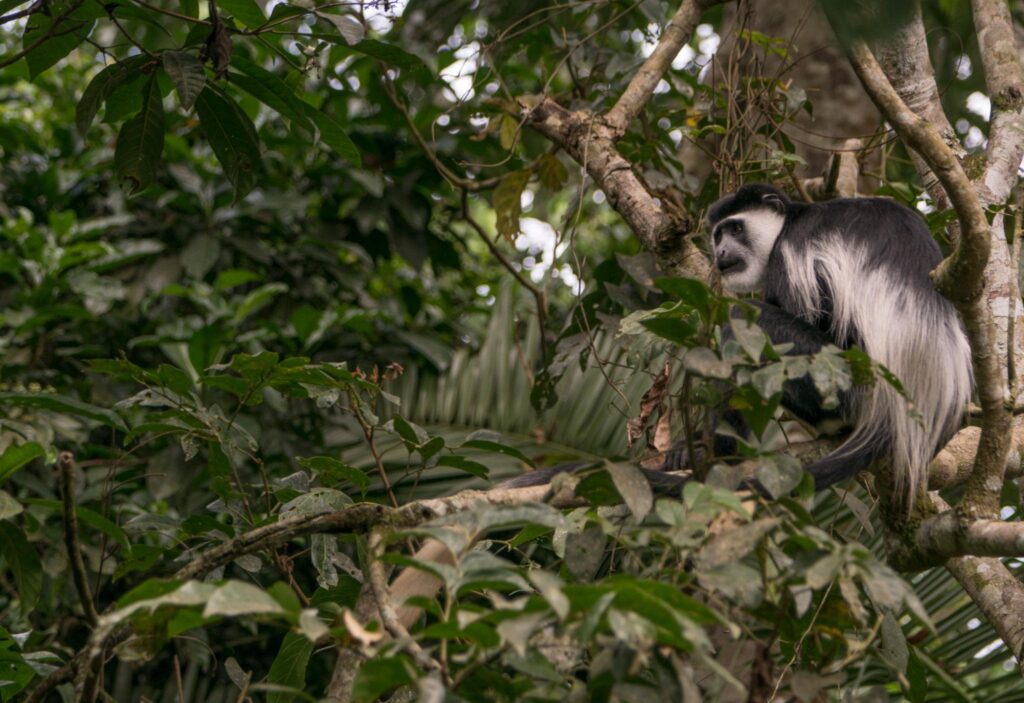
Chimpanzee tracking in Kyambura Gorge is one of the most sought-after experiences in western Uganda. The chimpanzees here are often referred to as the “lost chimpanzees” because they live in an isolated forest within the savannah landscape. Tracking begins with a descent into the gorge, where visitors follow forest trails in search of the chimpanzees. The terrain can be steep and humid, making the experience more adventurous compared to forest parks like Kibale National Park. Besides chimpanzees, the gorge supports several other primates, including black-and-white colobus monkeys, red-tailed monkeys, vervet monkeys, and L’Hoest’s monkeys. Early morning is the best time to spot these species as they are more active and easier to locate.
Savannah wildlife from Queen Elizabeth
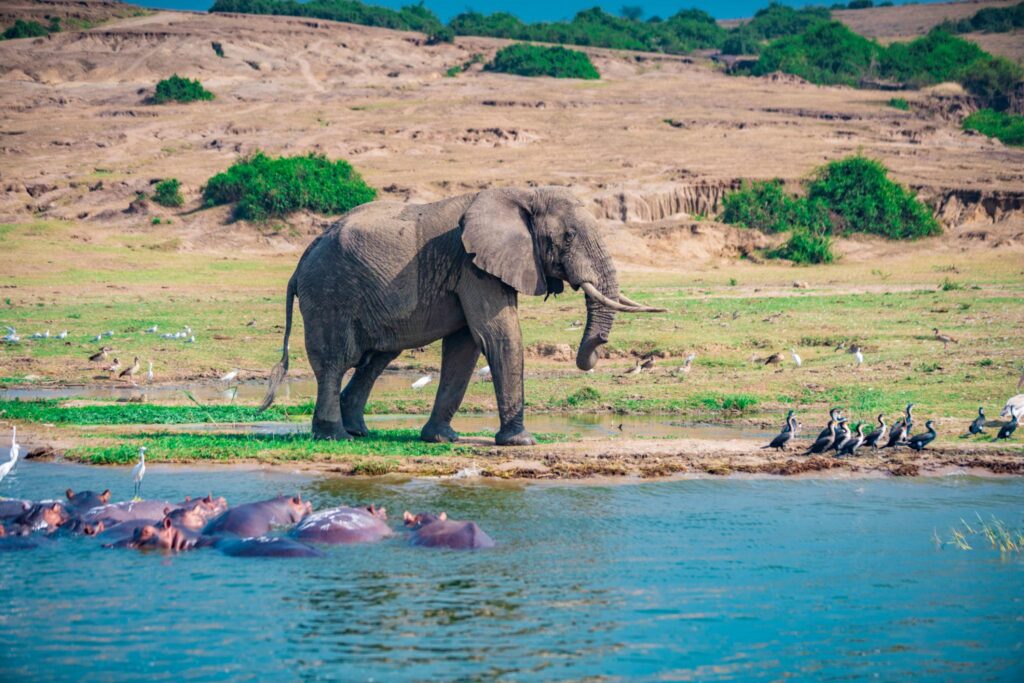
Although Kyambura Wildlife Reserve is primarily known for primates, it also supports savannah wildlife that moves between the reserve and Queen Elizabeth National Park. Visitors may encounter elephants, buffalo, Uganda kobs, warthogs, and various antelope species in the open areas surrounding the gorge. Hippos are commonly found near water sources, especially closer to the Kazinga Channel system. For travelers interested in large predators such as lions or leopards, Kyambura should be combined with game drives in Queen Elizabeth National Park, where sightings are more consistent.
Birdwatching in Kyambura Wildlife Reserve
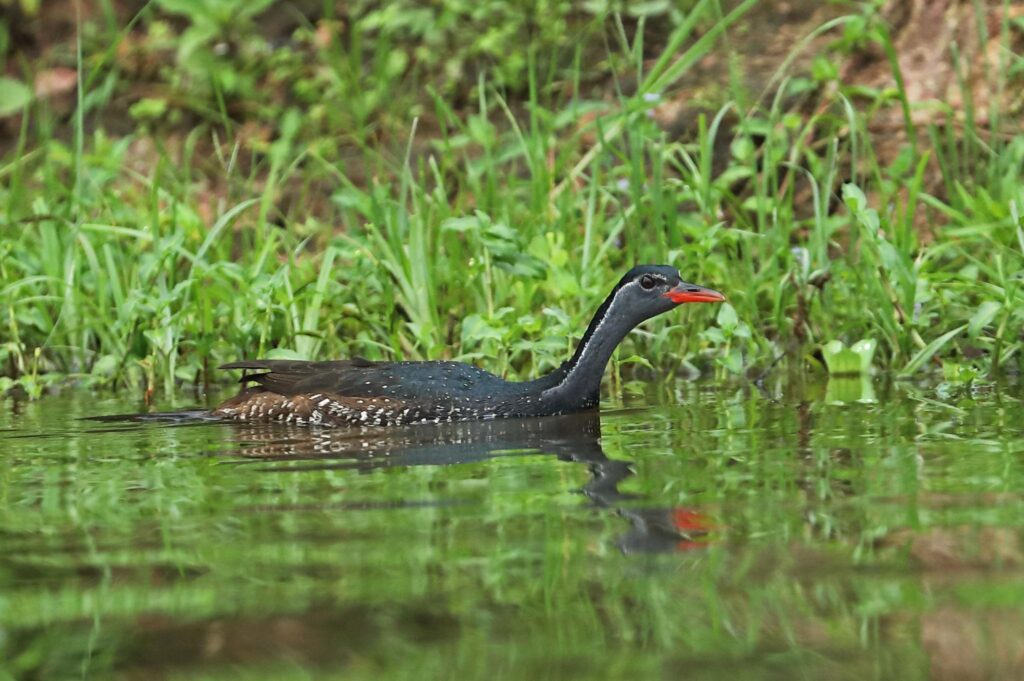
Kyambura Wildlife Reserve offers a varied birdwatching experience due to its mix of habitats, including forest, savannah, and nearby wetlands. This diversity allows birders to observe both forest species within the gorge and savannah birds in the surrounding plains. Common sightings include blue-headed bee-eaters, African finfoots, raptors such as falcons, and wetland birds influenced by the nearby Kazinga Channel. In some seasons, lesser flamingos and other migratory species may also be seen in the wider area. Guided birding walks are recommended, especially for visitors aiming to identify multiple species within a short stay.
Where to stay near Kyambura Wildlife Reserve
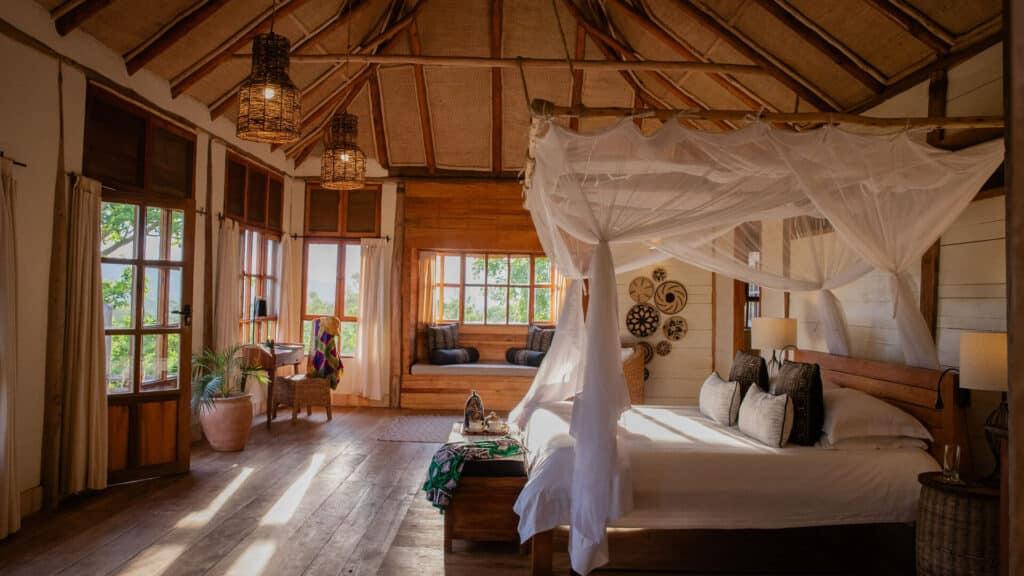
Accommodation around Kyambura Wildlife Reserve ranges from mid-range safari lodges to high-end eco-lodges. One of the most well-known options is Kyambura Gorge Lodge, which offers views over the gorge and easy access to chimpanzee tracking starting points. Other nearby options include lodges within Queen Elizabeth National Park, allowing travelers to combine chimpanzee tracking, game drives, and Kazinga Channel boat cruises within the same itinerary. For budget-conscious travelers, guesthouses and smaller lodges in nearby towns also provide access, though they may require additional travel time to reach the reserve.
Best time to visit Kyambura Wildlife Reserve
Kyambura Wildlife Reserve can be visited year-round, but the experience varies depending on the season. The drier months are generally more favorable for chimpanzee tracking and nature walks because trails are easier to navigate and visibility is better. During the rainy seasons, the gorge becomes greener and more scenic, but paths can be slippery and more challenging to walk. Visitors planning to track chimpanzees during this time should be prepared with proper hiking shoes and light rain gear.