
Gishwati Mukura National Park opened to the public in 2019 and is made up of two forest blocks, Gishwati and Mukura, with Gishwati being the larger of the two. The park covers about 34 sq km and is located along the Albertine Rift, on a ridge that separates the Congo and Nile water catchment areas. This positioning gives the park ecological importance and also contributes to its unique landscape of rolling hills, forest cover, and scenic viewpoints.
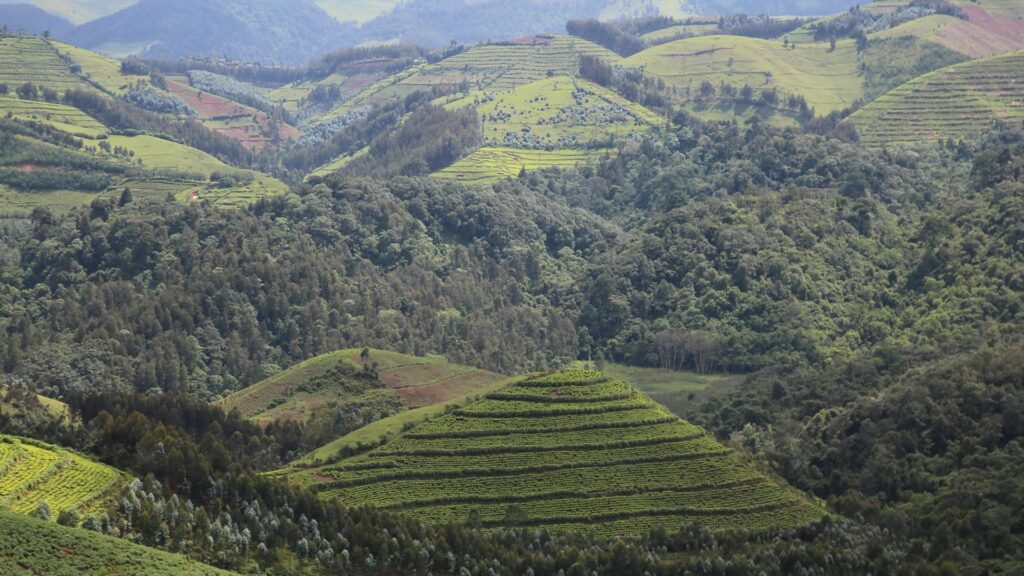
Wildlife and forest habitat in Gishwati Mukura National Park
Gishwati Mukura National Park is a recovering montane forest ecosystem that plays an important role in Rwanda’s conservation efforts. The park supports over 60 tree species, along with a mix of forest vegetation that provides habitat for primates, birds, and smaller wildlife. Unlike older parks such as Nyungwe Forest National Park, Gishwati Mukura is still regenerating, which makes the forest less dense in some areas. This actually creates better visibility for wildlife during guided walks and tracking activities. The park’s location along the Albertine Rift also makes it ecologically important, as it contributes to biodiversity conservation and protects water catchment systems that feed into both the Congo and Nile basins.
Chimpanzees and primates
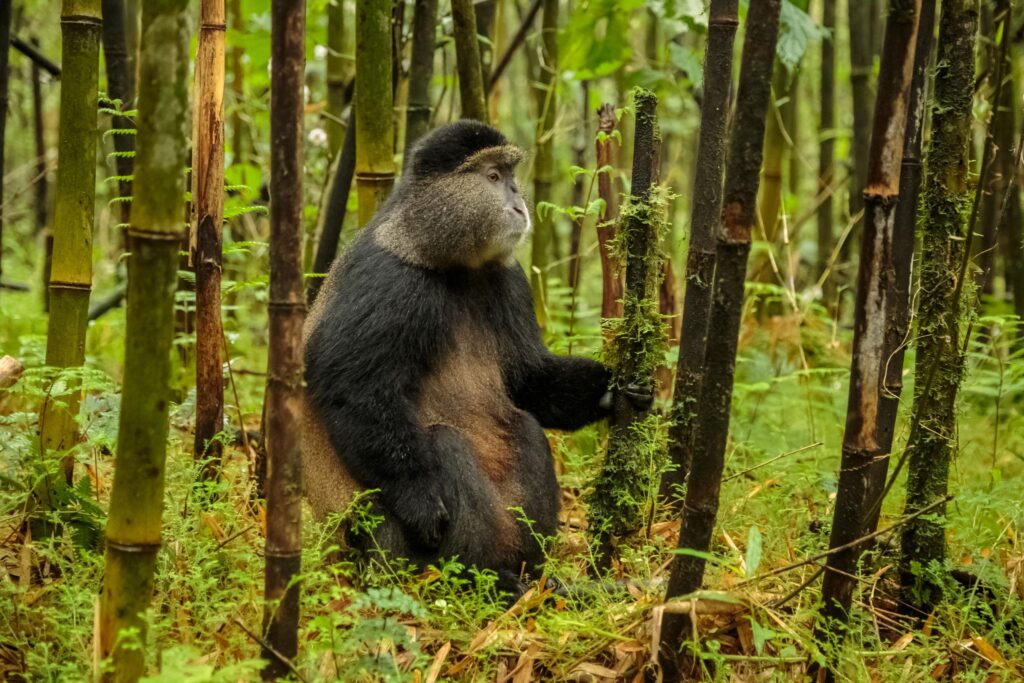
Chimpanzees are one of the main highlights of Gishwati Mukura National Park. The park is home to a small but growing group of chimpanzees, mainly found in the Gishwati forest block. Because the group is still being monitored and protected, the tracking experience here feels more exclusive and less crowded compared to larger parks. In addition to chimpanzees, the park supports other primates such as golden monkeys, L’Hoest’s monkeys, blue monkeys, and vervet monkeys. These species are usually seen during guided forest walks, especially in the early morning when they are most active. This makes Gishwati Mukura a good option for travelers who want a primate-focused experience in Rwanda without the higher traffic found in more established destinations.
Things to do in Gishwati Mukura National Park
Birdwatching in Gishwati Mukura National Park
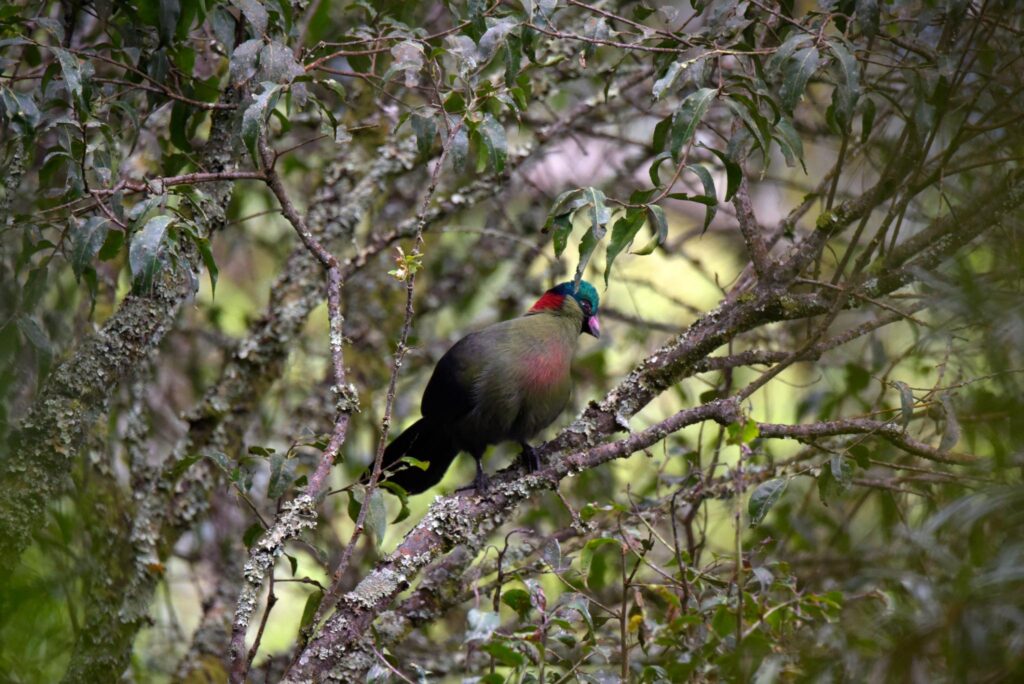
Gishwati Mukura National Park is one of Rwanda’s emerging birdwatching destinations, especially for travelers interested in forest and Albertine Rift species. The park has recorded over 230 bird species in Gishwati and more than 160 in Mukura, making it a rewarding destination for both casual birders and specialists. The variety of habitats, including forest, edges, and open areas, increases the chances of spotting different bird species within a relatively short distance. Early morning walks are the best time for birdwatching, when activity levels are highest, and visibility is good. For serious birders, hiring a local guide can significantly improve the experience by helping identify species and locate less obvious birds.
Chimpanzee tracking in Gishwati Mukura
Chimpanzee tracking in Gishwati Mukura National Park offers a quieter and more personal experience compared to other primate destinations in Rwanda. The activity begins early in the morning with a briefing from park guides, followed by a walk into the forest to locate the chimpanzees. Tracking can take between 2 to 5 hours, depending on the movement of the chimpanzees and the terrain. Once the chimpanzees are located, visitors are allowed a limited amount of time to observe their behavior, take photographs, and learn about their social structure. Because the chimpanzee group is still relatively small, sightings are not guaranteed, but this also adds to the sense of adventure and authenticity of the experience.

Golden monkey tracking
Golden monkey tracking in Gishwati Mukura National Park provides an alternative to the more popular experience in Volcanoes National Park. While Volcanoes remains the main destination, Gishwati offers a quieter setting with fewer visitors. The activity involves guided walks through forest areas where the monkeys are known to live. Golden monkeys are active and often move quickly, making the experience both engaging and dynamic.
Community and cultural visits
Community visits around Gishwati Mukura National Park give travelers a chance to connect with local communities and understand how conservation and daily life are linked. These visits may include time spent on farms, tea plantations, or with local artisans. Visitors can learn about traditional farming methods, local food preparation, and cultural practices, while also supporting community-based tourism initiatives. Farm stays are also available for those who want a more immersive experience.
Where to stay near Gishwati Mukura National Park
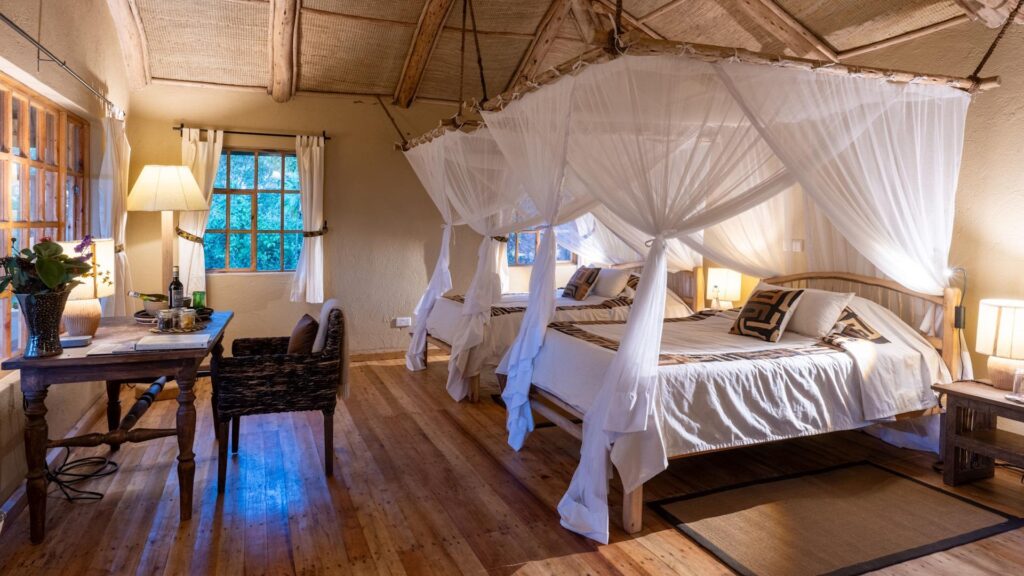
Accommodation options near Gishwati Mukura National Park are still developing, which makes it important to plan. The main lodge within the park is Gishwati Lodge, a high-end eco-lodge designed to offer both comfort and close access to primate tracking and forest activities. For travelers looking for alternative options, nearby towns such as Gisenyi offer additional hotels and guesthouses, including Lake Kivu properties. Staying near Lake Kivu can also allow you to combine your visit to Gishwati Mukura with relaxation by the lake.